Wondering whether Lynnfield feels like the right fit for your lifestyle? If you are looking for a suburban town with strong homeownership, convenient highway access, local shopping, and meaningful open space, Lynnfield offers a lot to consider. At the same time, it comes with clear tradeoffs, especially around transportation and pricing. Let’s take a closer look at what everyday life in Lynnfield, MA is really like.
Lynnfield at a glance
Lynnfield is a small suburb in Essex County with about 13,274 residents. It is a community where many people put down roots, with 92.0% of residents living in the same home one year earlier, according to Census QuickFacts. That kind of stability often appeals to buyers who want a town that feels established and consistent.
The town is also strongly ownership-oriented. Census data shows an 87.3% owner-occupied housing rate, which helps explain why Lynnfield often feels more residential than transient. For buyers, that can translate to a community where long-term homeownership is a defining part of daily life.
Daily life feels suburban and settled
One of Lynnfield’s biggest draws is its balance of convenience and breathing room. In the town’s open-space survey, residents pointed to the semi-rural quality of life, easy highway access, and preservation of open space and walking trails as key reasons they value living here. That gives you a useful snapshot of what locals appreciate most.
Lynnfield does not read like a dense urban area with activity on every block. Instead, it feels more quiet, residential, and spread out, with daily routines shaped by neighborhoods, local roads, and planned errands. If you prefer space, privacy, and a more measured pace, that may be a strong match.
The town also has a relatively high median household income of $175,265, and 28.0% of residents are under 18. Those numbers suggest a well-established community with many households planning for the long term. For some buyers, that adds to Lynnfield’s appeal as a place to settle in rather than pass through.
Commuting in Lynnfield is mostly car-based
If you live in Lynnfield, you will likely rely on your car for most daily travel. Town planning documents state that residents depend heavily on private automobiles, and the road network is a major part of how people move around. Route 128/I-95 and U.S. Route 1 run through town, and Interstate 93 is a short drive west by way of Route 128.
That highway access is one of Lynnfield’s practical advantages. If your work or routine takes you to nearby North Shore communities, Greater Boston, or other regional destinations, those road connections can make daily travel more manageable. Census data puts the mean travel time to work at 32.1 minutes, which gives you a general sense of what commuting can look like.
Public transportation is the main tradeoff. Lynnfield is not served by the MBTA or another public transportation system, according to the town’s planning documents. There are nearby MBTA stations in Wakefield, North Reading, and Reading, but reaching them typically still involves driving.
The town has made some local mobility improvements through Complete Streets projects, including accessible crosswalks near schools, Town Common improvements, and added sidewalk and bike path work. Lynnfield also operates a senior van for medical, pharmacy, library, and shopping trips within a 5-mile radius. These updates help with local access, but they do not change the town’s overall car-dependent pattern.
Shopping and dining are especially convenient
For a town of its size, Lynnfield offers a notably strong shopping and dining hub. MarketStreet is the town’s best-known destination for errands, restaurants, and everyday convenience. The town describes it as a mixed-use development on the former Colonial Golf Course, with retail, restaurants, office space, and rental apartments.
In practical terms, this means many daily needs can be handled in one general area rather than across a wide urban grid. The official directory includes grocery, dining, retail, beauty, and service options such as Whole Foods, Apple, Starbucks, Davio’s Northern Italian Steakhouse, Yard House, Temazcal Tequila Cantina, sweetgreen, Sephora, and Kings Dining & Entertainment. That concentration helps make routine errands feel efficient.
For many buyers, this is one of Lynnfield’s lifestyle perks. You get a suburban setting, but you also have a polished retail and dining center close by. The catch is that this convenience is still closely tied to driving, since the broader town layout remains road-based.
Open space is a major part of Lynnfield’s appeal
If outdoor access matters to you, Lynnfield stands out for its commitment to preserving open space. The town’s Conservation Commission says it has spent more than 50 years preserving hundreds of acres for active and passive recreation. That long-term focus shapes the town’s identity in a meaningful way.
Local conservation areas include Beaver Dam Brook Reservation, Bow Ridge, Reedy Meadow, Willis Woods, Rotary Park at Pillings Pond, and Pine Hill. These are not just background scenery. They are part of what gives Lynnfield its more natural, less densely built feel.
Reedy Meadow is especially notable. The town describes it as the largest freshwater cattail marsh in Massachusetts and a National Natural Landmark. Willis Woods is another strong local asset, with about 4 miles of trails and nearly a mile of Ipswich River frontage.
For buyers who want access to walking trails, natural areas, and recreation without leaving town, Lynnfield checks that box well. The town’s open-space priorities suggest this is not accidental. Preserving that character has been an important local goal.
Recreation is part of the town’s routine
Beyond conservation land, Lynnfield also offers active recreation opportunities that shape everyday life. The Recreation Department added a full-time director in 2014 and says its year-round programming has served roughly 8,000 residents in recent years. That level of participation points to recreation as a real part of community life.
The town also lists multiple parks and three golf courses, including town-owned Reedy Meadow Golf Course and the King Rail Reserve at MarketStreet. A rail-trail project is also part of the town’s recreation planning. If you enjoy outdoor activity, organized programs, or local recreational amenities, Lynnfield offers more than just residential streets.
Homes in Lynnfield are mostly single-family
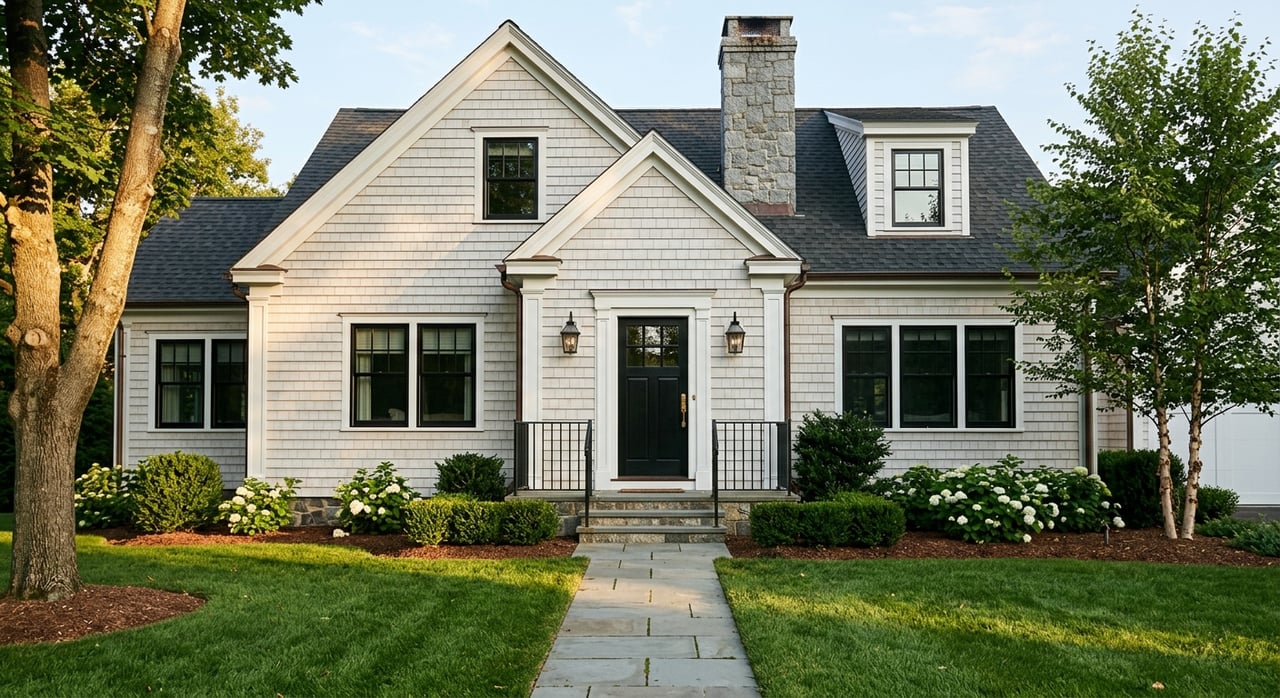
Lynnfield’s housing market is still dominated by single-family homes, and that fits the town’s overall character. Town planning materials describe the housing stock as mostly single-family ownership housing, and current listings support that picture. You will find some condos, townhome-style options, land, and new construction, but detached homes remain the main story.
Architecturally, traditional styles are common. Recent local listings have included an antique colonial, a gambrel colonial, a newly built colonial, and a brick colonial estate. If you are drawn to classic New England-style homes with established neighborhood settings, Lynnfield often reflects that style.
That said, there is some variety in the market. Realtor.com inventory referenced in the research report includes homes ranging from $749,000 to $8.95 million, which shows a wide spread in property type and positioning. Condos and townhome-style homes do exist, including options near Lynnfield Street and Salem Street, but they make up a smaller share of available housing.
Lynnfield home prices are on the higher side
Lynnfield is not generally an entry-level market. Realtor.com shows 66 active homes for sale with a median listing price of $1,212,500 and an average of 21 days on market. Redfin’s rolling three-month market data places the median sale price at $1,119,422, with a median of 38 days on market.
Census QuickFacts puts the median value of owner-occupied homes at $917,600. Together, those numbers point to a market that is expensive, ownership-heavy, and often better aligned with buyers who are already established or moving up. If Lynnfield is on your shortlist, it helps to go in with clear expectations about pricing.
For sellers, those same conditions help explain why presentation, pricing, and negotiation matter so much. In a market where buyers expect quality and value, a thoughtful strategy can make a meaningful difference. For buyers, it is equally important to understand how the town’s housing mix and price points align with your goals.
Who Lynnfield may suit best
Lynnfield can be a strong fit if you want:
- A stable suburban setting with high homeownership
- Good regional highway access
- Convenient shopping and dining in one main hub
- Preserved open space, trails, and recreation areas
- A housing stock centered on single-family homes
It may be less ideal if you want:
- Direct MBTA or in-town public transportation
- A walk-everywhere town layout
- Lower home prices or a broad entry-level inventory
In simple terms, Lynnfield offers suburban space, convenience, and a well-established residential feel. The tradeoff is that you will usually pay more for that lifestyle, and you will likely depend on a car for most of your routine.
Final thoughts on living in Lynnfield
Lynnfield appeals to buyers who want a polished suburban lifestyle with room to spread out, access to nature, and strong day-to-day convenience. Its combination of open space, established neighborhoods, concentrated retail at MarketStreet, and easy highway connections gives it a distinctive place within the North Shore area.
Like any town, it works best when your priorities match what it offers. If you value space, ownership-oriented neighborhoods, and a more settled pace of life, Lynnfield may feel like a very natural fit. If you are exploring a move, comparing towns, or thinking about buying or selling in Lynnfield, Debbie Caniff can help you evaluate the market with local insight and a tailored strategy.
FAQs
What is everyday life like in Lynnfield, MA?
- Everyday life in Lynnfield is suburban, residential, and largely car-based, with a strong focus on homeownership, open space, and convenient local shopping and dining.
Is Lynnfield, MA a good town for commuting?
- Lynnfield offers strong highway access through Route 128/I-95 and U.S. Route 1, but it does not have direct MBTA service, so most commuting depends on driving.
What kinds of homes are common in Lynnfield, MA?
- Lynnfield is dominated by single-family homes, especially colonials and other traditional house styles, with some condos, townhomes, land, and new construction also available.
Is Lynnfield, MA expensive?
- Lynnfield is generally a higher-priced market, with research showing a median listing price above $1.2 million and a median sale price above $1.1 million.
What are some popular outdoor features in Lynnfield, MA?
- Lynnfield offers preserved open space and recreation areas including Reedy Meadow, Willis Woods, Beaver Dam Brook Reservation, Bow Ridge, Pine Hill, and Rotary Park at Pillings Pond.
What makes Lynnfield, MA appealing to homebuyers?
- Many buyers are drawn to Lynnfield for its stable residential feel, high homeownership, highway access, outdoor amenities, and the convenience of MarketStreet for shopping and dining.
